

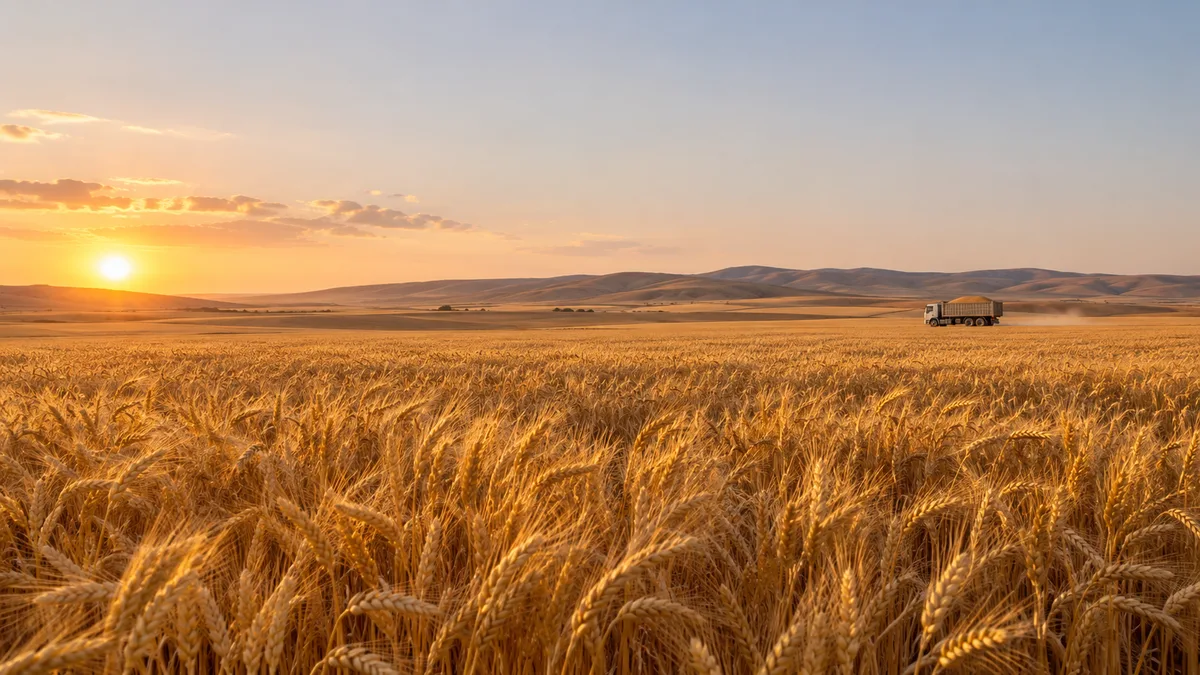
Wheat arriving at Anatolian grain markets can carry the same crop name yet attract different bids. Harvest tonnage describes how much grain has been collected, but it does not establish how well that grain will perform in a flour mill or pasta factory. For commodities trading, this distinction matters because buyers pay for particular uses. A large harvest can still leave suitable milling wheat relatively scarce if too much of the crop falls short of the required quality.
Across Central Anatolia, wheat quality depends on more than the amount of rain received during the growing season. Variety, soil conditions, fertiliser use and the timing of heat or rainfall can affect the harvested grain. Weather that supports plant growth earlier in the season may have different consequences near maturity. Rain close to harvest, for example, can encourage sprouting under suitable conditions, affecting the grain’s processing performance. Regional production totals can conceal these differences between fields and delivery batches.
Protein content receives considerable attention, although a protein percentage alone cannot describe every aspect of baking quality. Gluten strength, insect damage and sprouting can also influence how flour behaves. Hectolitre weight tells grain buyers how many kilograms of grain fit in 100 litres. It is one of the measures they use to judge quality. Moisture matters for storage and handling as well as the amount of dry material purchased. Buyers therefore assess several characteristics together rather than treating a single favourable test result as proof of suitability.
These distinctions can produce price movements that appear puzzling beside broad commodities trading headlines. An increase in available wheat may push ordinary grades lower while stronger milling grades retain a premium. Durum wheat used for semolina and pasta also has different specifications from bread wheat. Supplies cannot always be substituted freely between those markets. The relevant shortage may concern a particular combination of quality characteristics rather than wheat as a whole.
A hypothetical comparison illustrates the commercial effect. Suppose 2 wheat batches are offered at 10,000 Turkish lira and 10,400 Turkish lira per tonne, with identical delivery terms. The cheaper batch may require additional cleaning, drying or blending before it meets a mill’s production requirements. If those adjustments cost more than 400 Turkish lira per tonne, the higher initial quote could represent the lower usable cost. The outcome depends on actual processing needs, losses and the availability of suitable blending grain.
Laboratory analysis helps establish what is being offered. In Turkey’s licensed warehousing system, authorised classifiers analyse agricultural products and document their characteristics. A representative sample is essential because a test cannot reliably describe a delivery if it captures only its best portion. Grain can meet the buyer’s specifications when it is graded and still deteriorate in storage. Damp grain can turn mouldy, and rough handling can crack the kernels.
Location adds another layer. Grain offered near a consuming mill cannot be compared directly with an otherwise similar batch requiring a long road journey. Freight, loading, storage and payment timing can explain part of the price difference. Quality premiums become easier to identify when those commercial terms are held consistent.
During the Anatolian harvest, early reports of yields therefore provide only part of the pricing picture. As deliveries accumulate and tests reveal the distribution of grades, buyers gain a clearer view of the grain available for each use. A premium may narrow when more qualifying supplies appear, or persist when abundant total output contains relatively little of the quality processors need.